
Elijah, through God, wins the trial and humiliates Baal’s prophets to death… literally.
As often happens, his success creates even more headaches. After the trial, he receives a death threat from the queen. As a lover of Baal, she is humiliated in the Lord’s victory. Elijah initially plans to approach her directly. He quickly realizes, though, that she will loathe his presence.
He also likely considers whether he could possibly live uncomfortably under the radar in her territory.
Instead of these options, he runs with his servant out of the city into a neighboring land where nobody will find him. In fact, Elijah leaves his servant behind and runs deeper into the wilderness – all by himself.

Nearing exhaustion, Elijah finds a broom tree. Its wide canopy provides shade for rest Elijah’s body now demands. Being native to rugged, rocky and dry terrain, the broom tree’s presence tells us how far Elijah is from civilization.
Before he finally falls asleep, Elijah asks the Lord to take his life. Interestingly, he could have – instead of running – allowed the queen or any number of humiliated people to take his life. But, he humbly pushes himself a day into desert land to ask God finish him off. Laying under the broom tree, he loses consciousness. As his cognition fades, he assumes God is taking him from the earth.
Surprisingly, though, somebody touches him, jarring him from sleep. Being a day into the wilderness, it is very strange to be touched. Stranger yet, he knows that an animal didn’t wake him because he hears a voice, saying “arise and eat”.
Whoa.
He’s in the wilderness with nobody else and he is touched. He is nowhere near food, but there’s sustenance right before him. Obviously, he finds God – rather, God finds him exactly where he is. Elijah eats and drinks enough to lay back down. Again, the Lord feeds him.
He is led another forty days to Mount Horeb. Notably, he is led to the same place where Moses received the Ten Commandments generations earlier. It was here where Moses showed God’s power by producing water from a rock. It was here that God would, again, show his power to a human. It was here that Elijah found a cave and slept, to be awakened again by God.
“What are you doing here, Elijah?”
How would anybody answer that question? The omniscient, all-powerful and all-knowing God is asking you what you’re doing here?
The only possible answer is the honest answer that God already knows. I’m running for my life because I’ve been diligently working for you and the people are rejecting you and me. Being near you was my only hope. This is a place I know you’ve shown yourself to humans and I really wanted to be near you. It is an honest, genuine and touching answer. It underscores what we already know about Elijah- he genuinely wants to do God’s will and please Him.
God’s response? “Go out of the cave onto the mountain.” I want to you see me.
A strong wind hit Elijah. Not a tornado or a hurricane. Even more powerful. It broke rocks off the mountain and shattered them onto the ground. That must have been the Lord! Nope. The Lord was not in the wind.
Then, an earthquake hits, also sending rocks into the ground and cratering portions of the mountain. That must be the Lord telling Elijah something, right? No, the Lord was not in the earthquake.
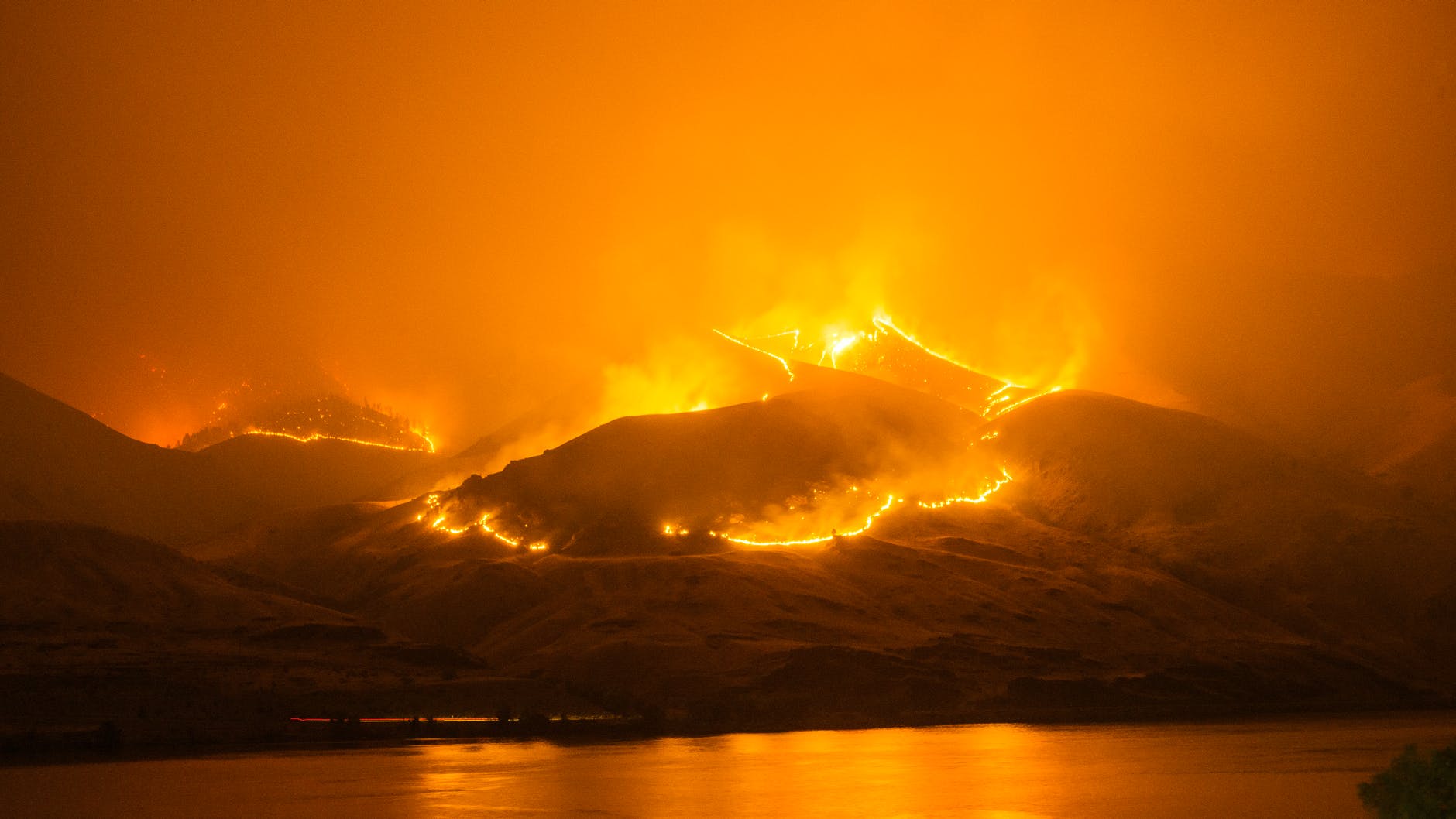
Then a fire ravages the mountainside. At this point, it seems obvious that the Lord is speaking, right? No- the Lord was not in the fire, either.
But after the savage wind, the mountain-crushing earthquake and a nature-consuming fire, a still, small voice comes over Elijah. The Lord’s voice, “What are you doing here, Elijah?”
The only possible answer is the honest answer. Consistent with his last answer, Elijah confesses his fear to the Lord. Everyone wants me dead and they all reject you. I don’t. I want to be near you and seek your guidance. Here you are, what do I do?
We sometimes run out of fear. Sometimes we fear reputational harm and sometimes we fear physical harm. We sometimes face a choice between living under the radar amongst those we fear and running to God for His help.
What we learn from Elijah’s story is that he “finds God” after showing his intense desire to be with God. More specifically, after witnessing several destructive forces that were not from God.
After what some would view as a major victory over Baal, Elijah realized that the people would perceive him to be gloating over a victory. Instead of running into the city after the victory, he ran to the Victor for comfort. The Victor did, in fact, meet Elijah and revealed where His peace is found.
Bene-action: Whether we are currently experiencing a fiery fear or smoldering anxiety, let’s write down one or two ways we know our fatigue stems from running toward God as opposed to hiding among the enemy.
From I Kings 19.
 Common Sensitivity